

**This post may contain affiliate links. Read the disclosure here.
It’s time to make plans for Valentine’s Day! No pressure, and I am well aware that this is a silly holiday, but it is a good opportunity to recognize the people we love and let them know how much we appreciate them. Affection is definitely a vital component for good health, and since Dinner Table Doctor sees a lot of patients who are struggling with anxiety, depression, diabetes, heart disease, obesity and memory issues, Valentine season is an excellent time to review how we can all keep our hearts happy and our minds sharp.
The Importance of Affection
Love and affection are crucial for mental health because they provide emotional security, reduce stress, and promote overall well-being. Supportive relationships help people navigate challenges and setbacks with resilience, so it is extremely important to foster connections with others. Friendships are as or perhaps even more important than romantic relationships, and even relationships with pets can improve our health. Love and companionship decrease cortisol (the stress hormone). High cortisol can lead to issues such as cardiac disease, obesity, diabetes, and strokes. Regular touching such as hugs, holding hands or a pat on the back actually releases oxytocin, a hormone and neurotransmitter which lowers stress levels. Oxytocin is like a natural “feel-good” chemical and there are many additional ways you can give it a boost, including giving and receiving compliments or acts of kindness and engaging in deep conversations and social bonding.
Protecting Against Dementia
Building and maintaining social connections is also one of the most powerful ways to support long-term mental health and even protect against cognitive decline, including dementia. Engaging in conversations, problem-solving with others, and participating in social activities challenges the brain in a unique way, keeping it stimulated and adaptable. This can help delay or even prevent symptoms of dementia. Conversations and shared experiences reinforce memory pathways, keeping recall and comprehension skills strong, and people with strong social ties actually tend to perform better on memory and cognition tests as they age.
Social connections help combat loneliness, which is a major risk factor for depression—a condition linked to cognitive decline. Having a strong support system increases resilience against life’s challenges, preventing mental and emotional strain that can affect brain health.
Positive Peer Pressure
Friends and family provide motivation to stay physically active, eat well, and engage in mentally stimulating activities—each of which helps protect brain and body health. For example, DTD makes A LOT of beans for supper and remains active, which keeps me eating a high fiber diet and staying active as well. In turn, I keep his social calendar full of various exciting activities, so we regularly connect with friends and family. Socially connected individuals are also more likely to seek medical care and follow treatment plans when needed. DTD has many patients who admit that they finally made an appointment with their doctor because their spouse, child, parent, sibling or friend encouraged them to do so.
Celebrating LOVE
This Valentine’s Day, celebrating love will improve your body and mind. There is no one way to celebrate love, but here are some ideas:
- Prioritize an in-person or virtual interaction with loved ones.
- Hug or hold hands with loved ones.
- Spend time with pets (petting a dog or cat releases oxytocin!)
- Engage in deep conversations and social bonding with someone you care about.
- Give someone you love a compliment – perfect content for a handmade Valentine!
- Practice mindfulness and meditation – spending quality time with yourself is important too!
The Perfect Valentine’s Day Date
DTD and I don’t usually go out for Valentine’s Day because we never think ahead of time to make a reservation! This works for us since we truly enjoy cooking together and pairing the perfect bottle of wine with a meal we create. While I’m not sure what’s on the menu this year, here is a wonderful recipe you and your loved one can prepare together while you connect in order to improve your body and mind!

Veal Braciole
There are so many different recipes for braciole. All of them involve thinly sliced meat rolled up, but the type of meat and fillings vary widely depending on the recipe you use. This delicious version is Sicilian and has a definite kick due to the ‘nduja, a spicy pork pâté from Calabria.
Pulse some pine nuts, capers, raisins, pecorino cheese, thyme and breadcrumbs with a few shots of olive oil in a food processor to form a paste. Then take some thin slices of veal, spread a thin layer of nduja on them and spread the breadcrumb paste over that. Roll up each slice of veal and tie it with some butcher string. Brush the rolls with olive oil and season with salt and pepper and then brown them on all sides in a cast iron pan until cooked through. Serve with sauce on the side.

This pasta is tossed with a simple Pomodoro Sauce which goes perfectly with braciole.
Pomodoro Sauce:
- grate 1/2 carrot
- chop 1 stalk celery
- chop half onion
- mince 2 cloves garlic
- heat 1 tablespoon olive oil in a sauce pan
- add first 4 ingredients and cook until onions are translucent
- add a 28 oz can of whole San Marzano tomatoes and break up the tomatoes
- add a 28 oz can of sauce
- simmer lightly for about 20 minutes and then add some salt to taste and some fresh basil before mixing with pasta of your choice
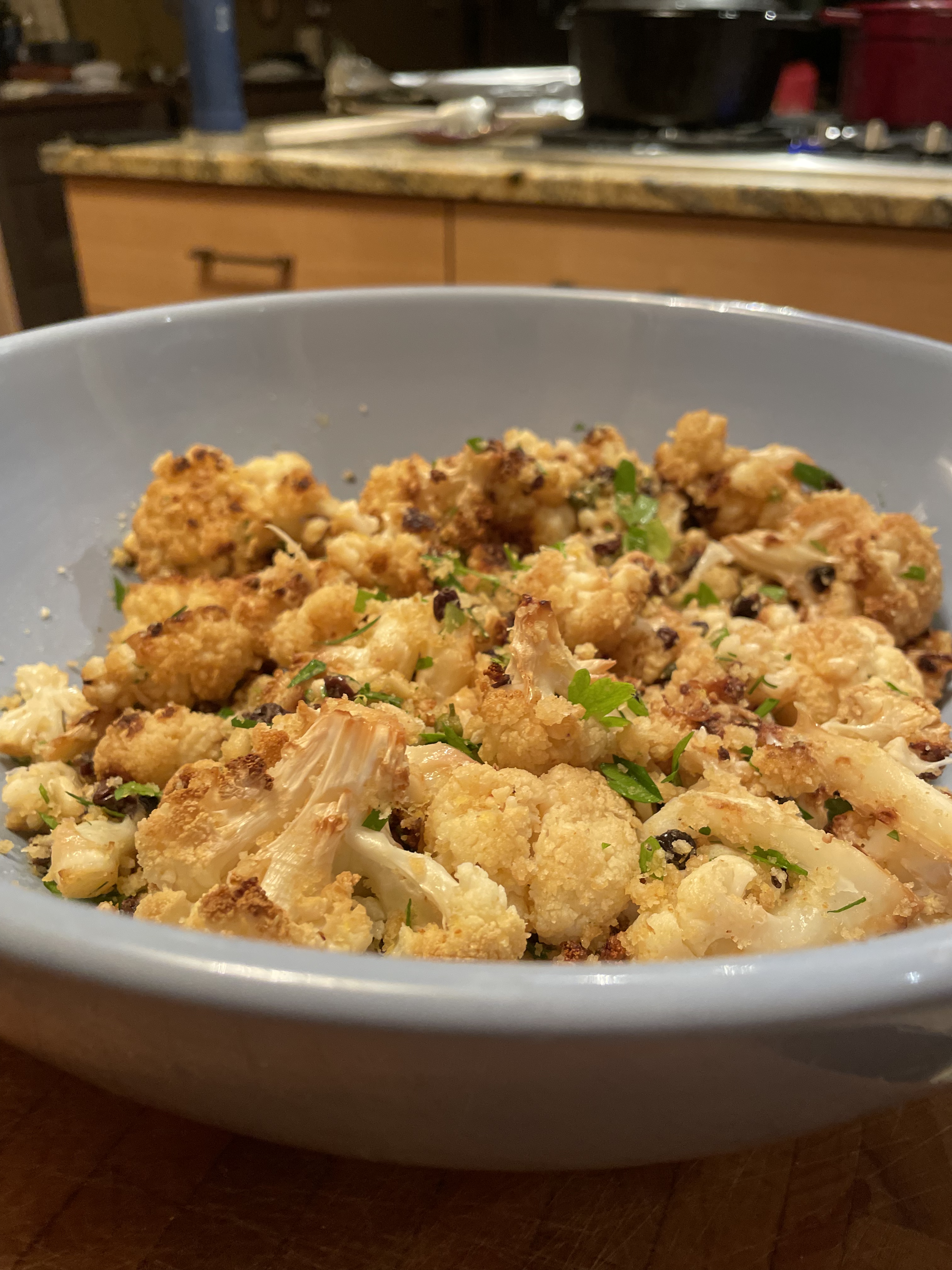
DTD says you must have vegetables as often as possible! This is a great recipe for jazzing up cauliflower. Even if you’re not a huge cauliflower fan, you should try this recipe. You just may change your mind!
Use this link for the recipe – Sicilian Cauliflower courtesy of Well Seasoned Studio.


Related Posts:
 Dinner Table Doctor